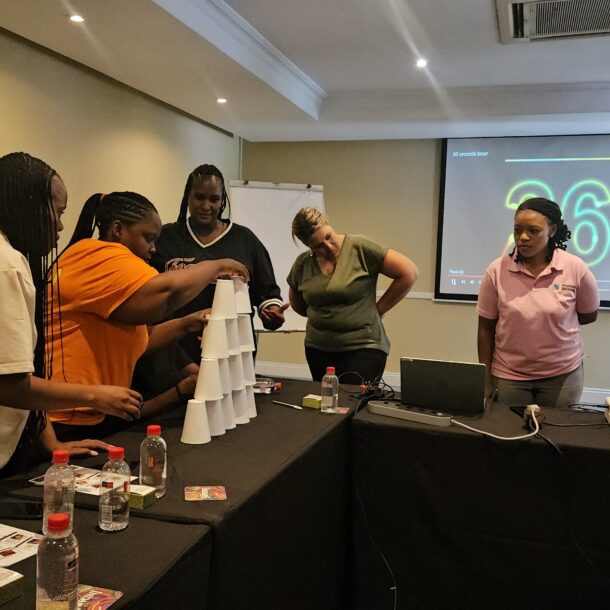

There is a moment that happens at almost every team-building event. Everyone is laughing. People who normally only exchange emails are suddenly talking. Managers are competing with their teams. Someone discovers a colleague has a surprisingly competitive side. Photographs are taken. Lunch is shared. For a few hours, the usual hierarchy of the workplace disappears. And then Monday arrives. The emails return. The deadlines return. The meetings return. The pressure returns. And suddenly the question becomes, did anything actually change?
That is the question organisations should be asking about team building. Not whether people had fun. Not whether everyone enjoyed the venue. Not whether the photographs looked good. But whether the experience changed something about how people work together. Because that is where team building becomes genuinely valuable.
A team can have excellent relationships and still perform poorly. People can like one another and avoid accountability. They can enjoy spending time together while making poor decisions. They can have strong friendships while avoiding difficult conversations. They can have high morale while missing deadlines. This is an important distinction. Team cohesion is valuable, but cohesion alone does not guarantee performance. High-performing teams need more than connection. They need clarity. They need trust. They need accountability. They need psychological safety. They need effective communication. They need the ability to disagree productively. And they need shared responsibility for outcomes. Team building should therefore move beyond the question, “Do our employees get along?” And towards, “Can our people work effectively together when the pressure is on?”
What Happens When the Pressure Changes? Think about your team during an ordinary Tuesday morning. Everyone knows what they are doing. The systems work. The deadlines are manageable. There are no major disagreements. Now change the conditions. A major client complains. Two departments disagree. A deadline suddenly moves forward. A key employee resigns. A manager is unavailable. A critical decision has to be made quickly. This is when team behaviour becomes visible. Who takes responsibility? Who communicates? Who withdraws? Who blames? Who steps forward? Who listens? Who makes assumptions? Who helps the team regain focus? Pressure reveals patterns that ordinary circumstances can hide. And those patterns matter enormously to organisational performance.
This is why experiential team development can be so powerful. A well-designed activity creates controlled conditions where teams have to make decisions, communicate, solve problems and adapt. The environment changes. The behaviour becomes visible. And suddenly, things that were difficult to see in the workplace become easier to discuss.
For example, a team may discover that they have a tendency to rush into decisions without listening. Another may discover that one person consistently takes control while others disengage. Another may realise that they avoid disagreement until problems become significantly bigger. These observations aren’t about identifying a “bad team member.” They are about identifying patterns. And patterns can be changed.
While every organisation is different, effective teams tend to depend on several fundamental behavioural conditions.
People need to understand what they are responsible for. Unclear roles create duplication, gaps and frustration. When everyone assumes someone else is responsible, accountability disappears. Team development should therefore create clarity around roles, responsibilities, expectations, decision-making and communication. Clarity reduces unnecessary friction.
Trust isn’t simply about liking your colleagues. It’s about believing that people will do what they say they will do. It means being able to raise concerns. It means being able to ask for help. It means being able to challenge an idea without fearing personal consequences. Without trust, teams protect themselves. With trust, teams can focus on the work.
High-performing teams don’t confuse support with avoiding accountability. People can support one another while still holding one another to a standard. In fact, strong teams often have both. They can say: “I understand the challenge you’re facing,” and simultaneously: “We still need to deliver.” That combination is essential. Compassion without compromising accountability.
Many organisations believe a good team is one where everyone agrees. That’s not necessarily true. Healthy teams can disagree. They can challenge assumptions. They can debate ideas. They can question decisions. The difference is that the conflict remains focused on the work rather than becoming personal. Avoiding conflict doesn’t create harmony. Sometimes it simply creates unresolved problems.
One of the most overlooked elements of experiential learning is the conversation afterwards. Imagine a team completing a difficult challenge. They succeed. Everyone celebrates. The facilitator moves on to the next activity. An opportunity has just been missed. The real learning may be in the questions: what happened? Why did it happen? Who took responsibility? Who didn’t speak? How were decisions made? What happened when the first approach failed? Did everyone feel heard? What would you do differently next time? Now the activity becomes a learning environment. The team isn’t simply completing a challenge. They’re examining how they behave.
One of the biggest challenges in team development is transferring learning from the event back into the workplace. People can recognise a behaviour during a team-building activity and still return to old habits on Monday. Why? Because the workplace environment reinforces those habits. If a manager normally makes every decision, one afternoon of delegation activities won’t automatically change that. If a team normally avoids conflict, one communication exercise won’t permanently remove that tendency. If roles are unclear, an enjoyable activity won’t fix the organisational structure. This is why team development needs to connect the experience to the systems and behaviours that exist back at work. The activity can reveal the behaviour. The organisation has to reinforce the change.
This is the shift organisations need to make. Traditional approach: Activity → Enjoyment → Memories. Development approach: Business need → Behaviour → Experience → Reflection → Application → Follow-through. The second approach doesn’t eliminate fun. It gives the fun a purpose. The objective isn’t to remove enjoyment from team building. It’s to stop enjoyment from being the only measurable outcome.
What Should Happen After the Event? A strong team-building intervention should give the organisation something to work with afterwards. For example, a team agreement. What behaviours will we expect from one another? Communication commitments. How will we handle difficult conversations? Accountability standards. What happens when commitments aren’t met? Leadership actions. What will managers do differently? Team priorities. What are the behaviours we need to strengthen? These commitments turn an event into the beginning of a process rather than the end of one.
There is another reason organisations should take team development seriously. Teams often reproduce the behaviour of their leaders. If leaders communicate poorly, teams often follow. If leaders avoid accountability, teams learn that accountability is negotiable. If leaders encourage healthy challenge, teams become more comfortable challenging ideas. If leaders consistently model ownership, teams learn that ownership matters. This means team-building interventions can also provide leaders with valuable insight. They can see how their team responds to different situations. They can identify strengths. They can identify patterns. And they can begin asking better leadership questions.
Fill in the form below to discuss a team-building strategy designed to strengthen collaboration, communication and team performance.
If you’re investing in team building, consider measuring more than attendance and satisfaction. Ask before the intervention. What is currently getting in the team’s way? During the intervention. What behaviours are emerging? Immediately afterwards. What did the team learn? Several weeks later. What has changed? Several months later. Is the change being sustained? Possible indicators include communication quality, team conflict, accountability, collaboration, decision-making, trust, employee experience, leadership effectiveness, productivity and team performance. The exact measures will depend on the organisation and the original objective. The important thing is to start with the outcome.
A Simple Test for Your Next Team-Building Event. Before approving the next team-building programme, ask, “If we removed the photographs, the venue and the activities, what organisational problem would this intervention still be solving?” If there is no answer, reconsider the design. If there is a clear answer, you have something much more valuable. You have a performance objective.
At Promote Balance, we view team building through the lens of corporate behaviour and performance. That means we don’t begin with “Which activity should we book?” We begin with “What does this organisation need its people to do differently?” From there, we can design an experience that creates opportunities for teams to connect, communicate, collaborate, make decisions, navigate challenges, reflect on behaviour, strengthen relationships and build accountability. The experience is important. But the experience is not the end goal. Behavioural change is.
A successful team-building event isn’t necessarily the one where everyone says: “That was so much fun.” It’s the one where, weeks later, someone says: “We handle that differently now.” That’s the difference. The value of team building isn’t measured by how long the event lasts. It’s measured by how long the learning lasts.
Your team doesn’t need another day away from the office simply because it’s been a difficult quarter. It needs an intervention that addresses what is making the work difficult. Sometimes that’s communication. Sometimes it’s trust. Sometimes it’s leadership. Sometimes it’s conflict. Sometimes it’s simply the need to reconnect before the next stage of growth. The right experience can create the space. The right facilitation can create the insight. But the organisation must create the conditions for the behaviour to continue. Don’t build a team that simply enjoys working together. Build a team that knows how to perform together.
Complete the form below to explore how a purposeful team-building experience can support stronger teamwork and organisational performance.
Promote Balance provides integrated people solutions designed to help organisations build healthy, high-performing workplaces. Our services span three core pillars — Employee Wellness, Leadership & Management Development, and People & Talent Solutions — offering everything from workplace counselling and team building to leadership training, executive coaching, recruitment, and psychometric assessments. We’re committed to creating balanced, productive, and resilient teams. Be it you’re in Johannesburg, Pretoria, Sandton, Rosebank, Midrand, Centurion, Randburg, Roodepoort, Soweto, Fourways, Bryanston, Kempton Park, Boksburg, Benoni, Germiston, Krugersdorp, or other areas across Gauteng, we can help.
Website Design © 2026 Promote Balance. All Rights Reserved
No products in the cart.
