
Leadership teams are expected to set direction, make decisions, and drive performance across an organisation. When alignment is unclear, accountability is inconsistent, or communication breaks down, the impact is felt across every level of the business.
This is why team building for leaders is fundamentally different from general team building. It is not about engagement alone. It is about strengthening how leaders think, communicate, and operate together.
Many organisations invest in leadership team building but focus too heavily on activities rather than outcomes. As a result, sessions may feel valuable in the moment but fail to create lasting change. Leaders return to the workplace and continue operating in the same patterns as before.
For leadership team building to work, it must be designed with intention. It needs to address real organisational challenges and create space for meaningful conversations, reflection, and alignment.
When done correctly, it becomes a powerful tool for improving decision-making, strengthening accountability, and ensuring that leaders are working towards shared goals.
Share what’s showing up—low trust, poor accountability, conflict, tension, burnout-driven irritability, or lack of clarity—and we’ll recommend the right intervention.
Leadership teams often appear aligned from the outside. They attend the same meetings, review the same reports, and work towards the same organisational objectives. However, alignment at a surface level does not always translate into effective collaboration.
In many organisations, leaders operate within their own areas of responsibility. While this is necessary, it can also lead to silos. Decisions are made in isolation, priorities compete, and communication becomes fragmented.
Accountability can also become unclear. Without shared expectations, leaders may interpret responsibilities differently. This can lead to missed deadlines, duplicated efforts, or tension between departments.
Communication is another common challenge. Important conversations are often avoided, delayed, or handled indirectly. Over time, this creates misunderstandings and weakens trust within the leadership team.
These challenges are not always visible, but they have a direct impact on organisational performance. When leadership teams are not aligned, the rest of the organisation feels it.
This is where leadership team building becomes essential. It creates an opportunity to address these challenges directly and build stronger ways of working together.
Team building for leaders should never be generic. It needs to be focused on the specific dynamics and challenges within the leadership team.
At its core, effective leadership team building focuses on three key areas. These are alignment, accountability, and communication.
Alignment ensures that leaders are working towards the same priorities. It goes beyond understanding organisational goals. It requires clarity on how each leader contributes to those goals and how decisions are made collectively.
Accountability creates consistency. It ensures that commitments are clear, responsibilities are understood, and follow-through is expected. Without accountability, even the best strategies fail to deliver results.
Communication underpins everything. Leaders need to be able to have open, honest, and constructive conversations. This includes giving feedback, addressing challenges, and making decisions together.
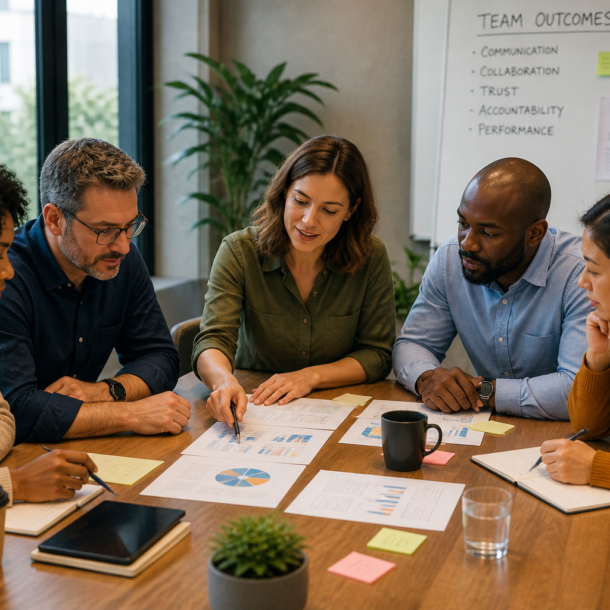
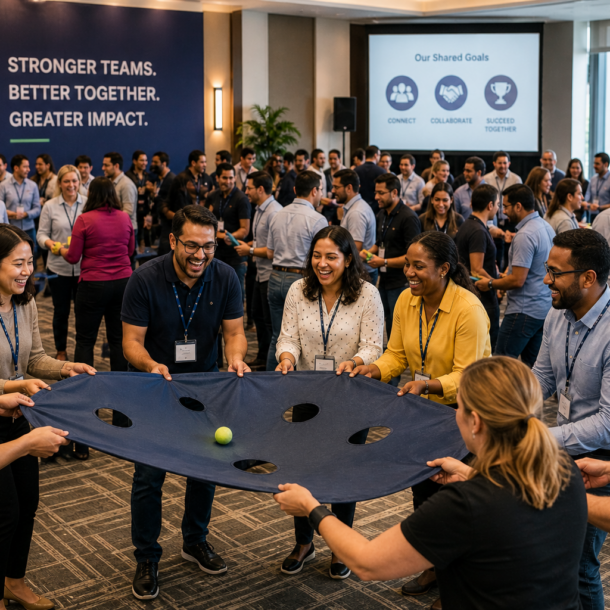
A well-designed corporate team building workshop for leaders creates space to explore these areas in a practical and meaningful way.
This often includes:
These elements ensure that the session is not just engaging, but also relevant and impactful.
Designing team building for leaders requires a different approach from standard team building sessions. The focus is not on participation alone, but on depth, relevance, and application.
One of the most important factors is creating a safe and structured environment. Leaders need to feel comfortable discussing challenges, sharing perspectives, and engaging in honest conversations. Without this, the session may remain at a surface level.
Another key element is relevance. The content must reflect the real dynamics within the leadership team. Generic exercises rarely create meaningful change. Instead, sessions should be tailored to the organisation’s context, challenges, and goals.
A skilled team building facilitator plays a critical role here. The facilitator is responsible for guiding discussions, managing group dynamics, and ensuring that the conversation remains productive. They help leaders move beyond surface-level discussions and engage with the issues that matter most.
Clarity is also essential. Leaders need to leave the session with a clear understanding of what needs to change and how they will implement those changes. This includes defining actions, responsibilities, and follow-through.
To support long-term impact, organisations should consider how the outcomes of the session will be reinforced. This could involve follow-up sessions, leadership coaching, or integrating key insights into regular leadership meetings.
When these elements are in place, leadership team building becomes more than just a workshop. It becomes a catalyst for improved performance.
A team building facilitator is not just there to run activities. Their role is to guide the leadership team through a structured process that leads to meaningful outcomes.
This includes creating the right environment, asking the right questions, and managing the flow of the session. A skilled facilitator understands how to balance structure with flexibility, allowing the conversation to evolve while keeping it focused on the objectives.
They also help surface issues that may not be openly discussed. In leadership teams, certain challenges can remain unspoken. A facilitator creates the space for these issues to be addressed in a constructive way.
Another important aspect is maintaining neutrality. The facilitator is not part of the organisation’s internal dynamics. This allows them to provide an objective perspective and challenge assumptions where necessary.
In addition, a facilitator ensures that the session leads to actionable outcomes. They help the team define clear next steps and ensure that there is accountability for implementation.
This is what differentiates a well-facilitated corporate team building workshop from a generic session.
Team building for leaders should always be connected to performance. The goal is not just to improve relationships, but to enhance how the leadership team operates as a whole.
When alignment improves, decisions become clearer and more consistent. When accountability strengthens, execution becomes more reliable. When communication improves, collaboration becomes more effective.
These changes have a direct impact on the organisation. Teams become more focused, challenges are addressed more quickly, and overall performance improves.
However, this does not happen automatically. It requires intentional design, skilled facilitation, and ongoing reinforcement.
Leadership team building should be seen as part of a broader strategy for developing leaders and strengthening organisational performance.
Share what’s showing up—low trust, poor accountability, conflict, tension, burnout-driven irritability, or lack of clarity—and we’ll recommend the right intervention.
Promote Balance provides integrated people solutions designed to help organisations build healthy, high-performing workplaces. Our services span three core pillars — Employee Wellness, Leadership & Management Development, and People & Talent Solutions — offering everything from workplace counselling and team building to leadership training, executive coaching, recruitment, and psychometric assessments. We’re committed to creating balanced, productive, and resilient teams. Be it you’re in Johannesburg, Pretoria, Sandton, Rosebank, Midrand, Centurion, Randburg, Roodepoort, Soweto, Fourways, Bryanston, Kempton Park, Boksburg, Benoni, Germiston, Krugersdorp, or other areas across Gauteng, we can help.
Website Design © 2026 Promote Balance. All Rights Reserved
No products in the cart.