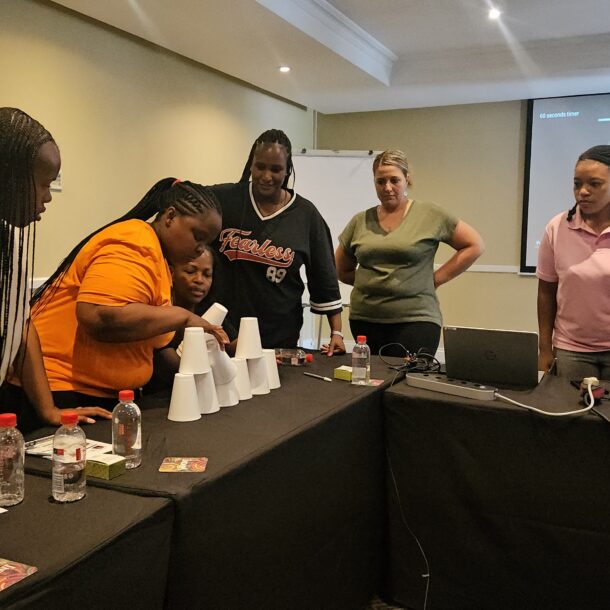

Imagine this. It’s Friday afternoon. Your team has spent the day away from the office. There’s laughter, competition, food, photographs and a few moments that will probably become inside jokes for months. Everyone leaves smiling. The WhatsApp group is suddenly more active. Monday arrives. And by Wednesday, the same problems are back. The communication breakdown. The unresolved conflict. The silo mentality. The manager who doesn’t delegate. The employee who doesn’t speak up. The meetings that go nowhere. The frustration that everyone thought the team-building day had somehow fixed. It didn’t. And perhaps the problem was never the team-building activity. The problem was expecting an activity to create a behavioural outcome without addressing the behaviour itself.
The phrase team building can mean almost anything. A cooking class. A golf day. A treasure hunt. A wellness experience. A ropes course. A corporate lunch. A competitive game. None of these are inherently bad. In fact, shared experiences can create connection, positive emotion and opportunities for people to interact differently. But there is an important distinction:
An experience is not automatically an intervention. An activity can create a memorable day. A properly designed team-building intervention should create an opportunity for a team to understand, practise and change the behaviours that influence how they work together. That distinction matters. Because organisations aren’t ultimately paying for a day away from the office. They’re paying for what happens after the team returns to it.
Before planning a team-building event, the most important question isn’t, “What activity should we do?” It is, “What needs to be different when this team comes back to work?” That question changes everything. Perhaps the team has a trust problem. Perhaps departments aren’t collaborating. Perhaps conflict is being avoided. Perhaps accountability is inconsistent. Perhaps a new leadership team needs to establish working relationships. Perhaps employees are struggling to communicate after organisational change. Perhaps the organisation simply wants to strengthen an already healthy team. These are very different situations. They shouldn’t receive the same intervention.
Consider two organisations. Both book the same team-building experience. Both have twenty employees. Both spend the day completing challenges together. Both take photographs. Both have lunch. But their starting points are different.
The team already communicates well. Their challenge is maintaining connection as the organisation grows. The activity reinforces collaboration and creates space for employees to understand one another outside their normal roles. It works.
The team has unresolved conflict. Two departments don’t trust each other. Managers avoid difficult conversations. Employees blame one another when deadlines are missed. They participate in exactly the same activity. Everyone has fun. But nobody addresses the underlying behaviours. Monday arrives. The conflict is still there.
Same activity. Different problem. Different outcome. This is why effective team building begins with diagnosis.
At Promote Balance, we look beyond the activity itself. We look at the behaviours underneath the team’s performance. How do people communicate? How do they respond to pressure? How do they handle disagreement? How do they make decisions? How comfortable are they giving feedback? Do people take ownership? Do they understand their roles? Do they trust one another? Do leaders create clarity? Do team members feel safe enough to challenge ideas? These questions tell us far more about team performance than whether everyone enjoyed the afternoon.
Fill in the form below to discuss a team-building approach designed around your organisation’s specific needs and challenges.
There is nothing wrong with fun. Fun matters. People need opportunities to connect, laugh and experience one another outside their normal work environment. But fun should not be confused with transformation. A successful team-building experience can have both. It can be enjoyable while also being intentional. The key is what happens around the activity.
Before: Understand the Team. Before designing the experience, organisations should understand what is happening inside the team. This doesn’t necessarily require a complicated assessment. Sometimes it starts with conversations. What is working? What isn’t? Where are the tensions? What behaviours are getting in the way? What does the manager see? What does the team experience? What would better performance look like? The answers provide the foundation for the intervention.
During: Make the Behaviour Visible. The activity becomes a practical environment for observing behaviour. Who naturally takes control? Who withdraws? Who listens? Who interrupts? Who delegates? Who takes responsibility? Who blames? Who brings people together? Who becomes anxious when plans change? These behaviours can become powerful learning moments. The purpose isn’t to label people. It’s to create awareness. Because people often behave differently when the environment changes, and those behaviours can reveal patterns that are difficult to see during a normal workday.
After: Transfer the Learning Back to Work. This is where many team-building initiatives lose their value. The team returns to work. The photos go onto social media. The event becomes a memory. And nothing changes. A strong intervention creates a bridge between the experience and the workplace. Ask what did we learn about how we work together? What behaviour should we continue? What needs to change? What will we do differently on Monday? What will accountability look like? Without this step, the organisation risks creating an excellent experience with very little behavioural transfer.
The best team-building interventions are connected to a real organisational objective. For example, problem: Poor communication. The intervention can focus on listening, clarity, feedback and communication under pressure. Problem: Silo behaviour. The intervention can create shared objectives and demonstrate the consequences of fragmented decision-making. Problem: Leadership transition. The intervention can help a new leadership team establish trust, roles, decision rights and ways of working. Problem: Conflict. The intervention can create structured opportunities to practise disagreement, perspective-taking and resolution. Problem: Low engagement.
The intervention can explore connection, recognition, psychological safety and the employee experience. The activity is simply the vehicle. The behavioural objective is the destination.
What Should Organisations Measure? This is another question worth asking. If your organisation invests in team building, how will you know whether it worked? Not just “Did everyone enjoy it?” Ask did communication improve? Did collaboration improve? Are conflicts being addressed earlier? Has accountability changed? Are teams making decisions more effectively? Has trust improved? Are managers delegating differently? Are employees demonstrating greater ownership?
Even simple pre- and post-intervention questions can provide useful insight. Because if you cannot describe the intended outcome, it becomes difficult to evaluate the intervention.
Team building is often treated as an employee perk. That framing undersells what it can achieve. When intentionally designed, team development can support: Better collaboration → clearer communication → stronger relationships → improved execution → stronger organisational performance.
The goal isn’t to create a team that simply likes one another. The goal is to create a team that can work effectively together. Those aren’t the same thing. You don’t need everyone to be friends. You need people to understand their responsibilities, communicate effectively, manage differences, trust the process and remain accountable for the outcomes they collectively own.
Before approving your next team-building budget, don’t ask: “What can we do that everyone will enjoy?” Ask “What organisational behaviour are we trying to strengthen?” Then design the experience around that answer. That is where team building becomes more than an event. It becomes a performance intervention.
At Promote Balance, We See Team Building Differently At Promote Balance, team building sits at the intersection of human behaviour and organisational performance. Our approach is designed around the specific needs of the organisation and the behaviours that influence team effectiveness. That means the experience isn’t selected first. The organisational need comes first. We then design an experience that creates opportunities for teams to connect, reflect, practise and strengthen the behaviours required for better performance. Because the objective isn’t simply to create a great day. It’s to create a team that works better after the great day is over.
Before Your Next Team-Building Event, Ask These Five Questions
If you can’t answer these questions, you may be planning an activity. If you can answer them, you’re starting to design an intervention.
A team can spend eight hours together and still fail to become a better team. It can also spend a few carefully designed hours confronting the way it communicates, makes decisions, handles conflict and supports one another and return to work fundamentally differently. The difference isn’t necessarily the venue. It isn’t the food. It isn’t the activity. It’s the intention behind the experience. The best team-building experiences don’t end when everyone gets back on the bus. That’s where the real work begins.
Complete the form below to explore how a purposeful team-building intervention can strengthen communication, collaboration and team performance.
Promote Balance provides integrated people solutions designed to help organisations build healthy, high-performing workplaces. Our services span three core pillars — Employee Wellness, Leadership & Management Development, and People & Talent Solutions — offering everything from workplace counselling and team building to leadership training, executive coaching, recruitment, and psychometric assessments. We’re committed to creating balanced, productive, and resilient teams. Be it you’re in Johannesburg, Pretoria, Sandton, Rosebank, Midrand, Centurion, Randburg, Roodepoort, Soweto, Fourways, Bryanston, Kempton Park, Boksburg, Benoni, Germiston, Krugersdorp, or other areas across Gauteng, we can help.
Website Design © 2026 Promote Balance. All Rights Reserved
No products in the cart.